

Annual Roof Anchor Inspection
OSHA requires annual inspections of roof anchor and fall protection systems to maintain compliance. Over time, anchors can be affected by weather exposure, structural movement, and general wear, issues that are not always visible from the surface. At ADS, our inspections go beyond a simple visual check. We evaluate each anchor point individually, verify system layout against documented plans, and provide the detailed reporting you need to stay compliant.
Talk to a Safety Specialist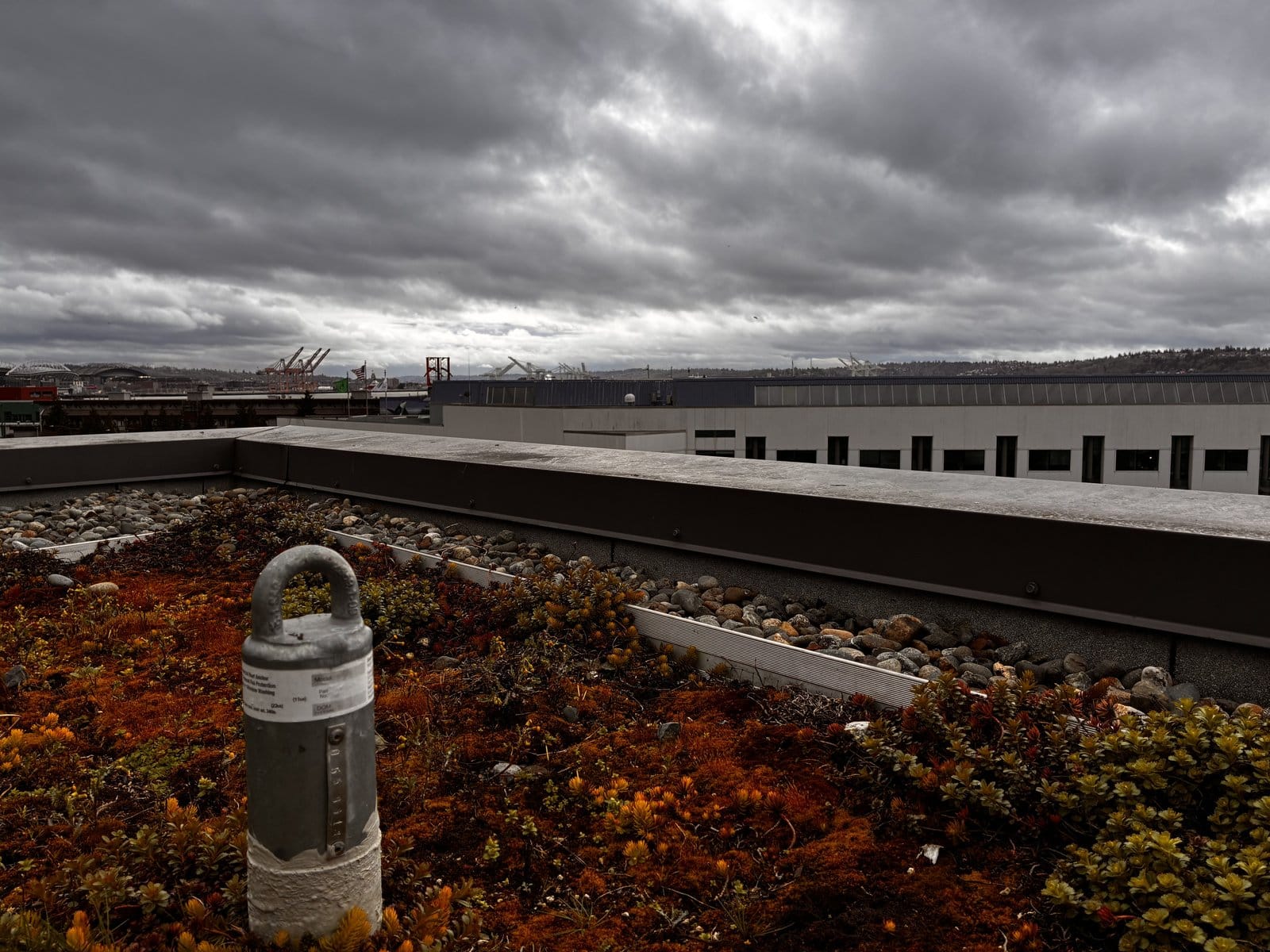
What Our Inspection Includes
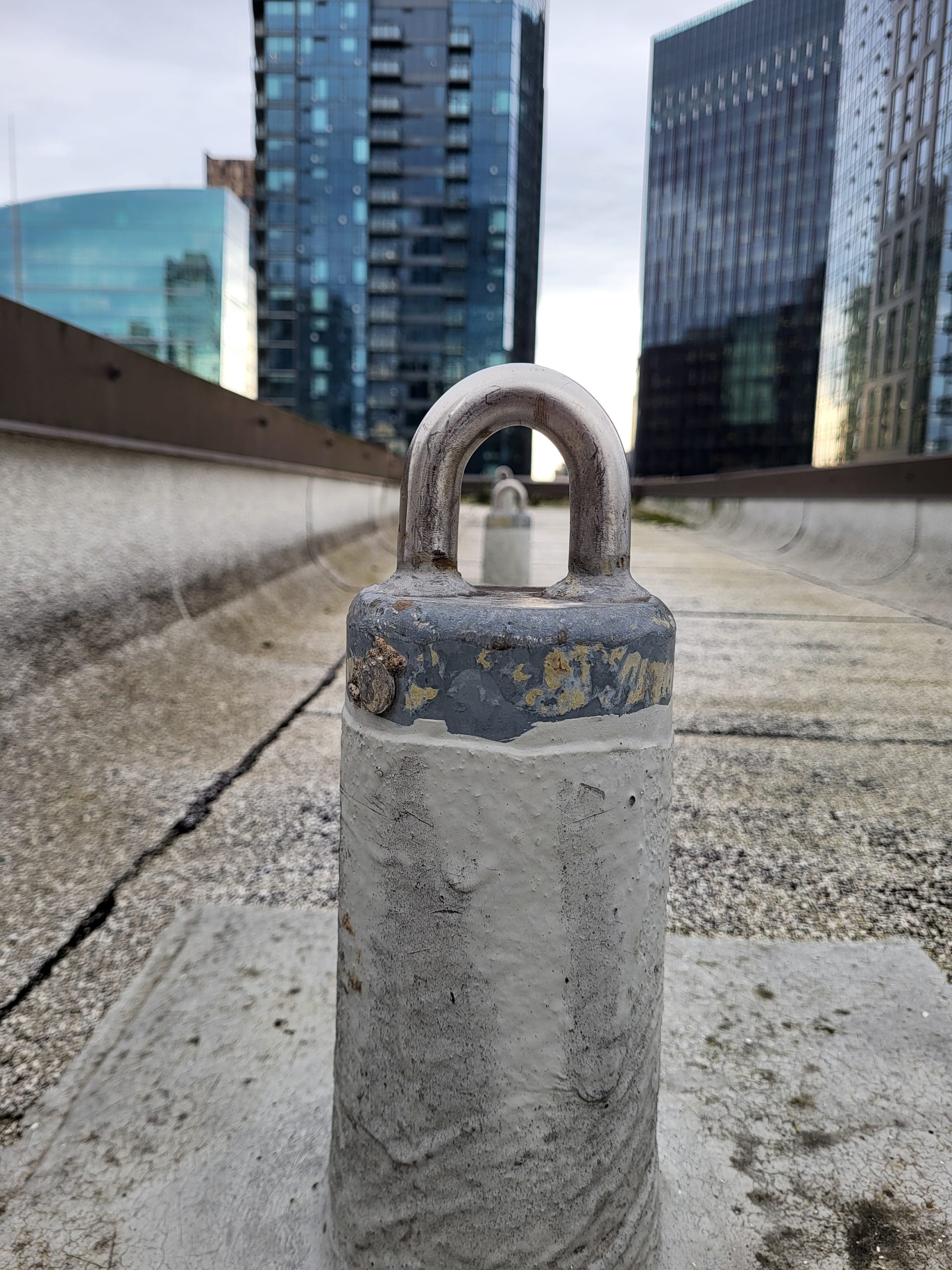
Every inspection we perform follows a structured, repeatable process designed to catch issues early and provide clear documentation. We physically evaluate each anchor point for corrosion, loosening, base plate integrity, and proper installation. Each anchor is tagged with a unique identifier and its condition is recorded.
After the inspection, you receive a comprehensive report that includes the status of every anchor, any issues found, recommended actions, and photographic documentation. Plan proactively, not reactively.
We inspect all types of anchor systems, including fixed single-point anchors, davit bases and sockets, horizontal lifeline terminals, and parapet clamp attachment points. If the system was installed by another contractor or if the original documentation is missing, we can still evaluate what is in place and provide a current assessment of its condition.
Why Annual Inspections Matter
Roof anchor systems are life-safety equipment, and OSHA mandates regular inspections to ensure they remain safe. Without annual inspections, your building is not only at risk from hidden deterioration (corroded fasteners, compromised base plates, shifting structural connections) but also exposed to OSHA fines and legal liability. Staying current on inspections protects your people, your property, and your bottom line.
For a closer look at timing, see our guide to how often roof anchors need to be inspected. And if you are comparing providers, our guide on how to choose a roof anchor inspector covers the questions worth asking.
There is also a practical scheduling concern. If a window cleaning or facade maintenance contractor arrives on site and finds that anchors have not been inspected within the past 12 months, they are required to stop work. That means delays, rescheduling costs, and potentially losing your spot in a busy contractor's calendar. Staying current on inspections keeps your maintenance schedule on track.
Compliance-Ready Documentation
Maintaining proper documentation is just as important as maintaining the anchors themselves. Our inspection reports are designed to meet the documentation requirements that property managers, insurance carriers, and safety regulators expect.
We provide clear records of each anchor's condition, track changes year over year, and help you stay ahead of scheduling requirements. Don't wait for a contractor to flag an uninspected system. Stay on schedule, stay compliant.
Our reports include a building overview, an individual assessment of every anchor point with unique identifiers, photographic evidence of each anchor's condition, and a summary of recommended actions organized by priority. If your building is due for recertification, the annual inspection data feeds directly into that process, saving time and avoiding duplicate work.
What We Inspect and Why It Matters
A thorough anchor inspection is more than a visual check. It’s a requirement. OSHA and ANSI standards mandate regular inspections to maintain compliance, and failure to keep up can result in fines, work stoppages, and serious liability. Our competent inspectors evaluate every component of each anchor point against these standards. Here is what we look for and why each element matters:
Corrosion & Surface Degradation
Marine climates, desert UV exposure, and industrial environments all attack anchor hardware differently. We assess corrosion depth, surface pitting, and coating integrity to determine whether degradation has compromised structural capacity.
Concrete & Substrate Condition
An anchor is only as strong as the material it is embedded in. We check for cracking, spalling, delamination, and water intrusion around anchor base plates and embedments that could reduce pull-out strength.
Weld Integrity & Fasteners
Welded connections and mechanical fasteners are stress points that degrade over time. We inspect for weld cracking, bolt loosening, and thread damage that could lead to sudden failure under load.
System Layout & Documentation
We verify that anchor placement matches documented plans, that spacing meets standards for the intended use, and that every anchor is uniquely tagged and traceable in our reporting system.
Contact ADS
Tell us about your building or project and we'll be in touch within one business day.