

Roof Anchor Compliance Guide
Roof anchor systems play a critical role in building safety, yet compliance requirements are often misunderstood or overlooked. For property managers and building owners, maintaining compliant anchor systems is not only a matter of safety. It is a matter of documented responsibility and liability. This guide outlines what compliance means, what is required, and how to ensure your building meets current standards.
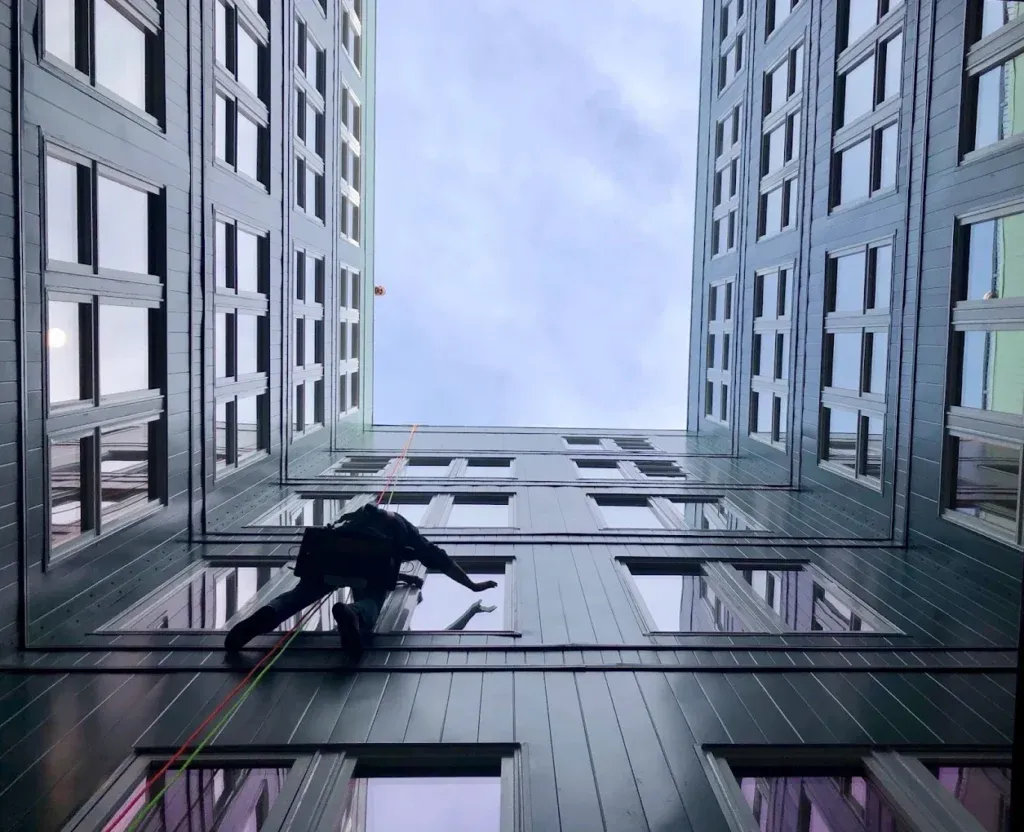
What Roof Anchor Compliance Really Means
Roof anchor compliance is the process of ensuring that all anchor and davit points used for fall protection are properly designed, maintained, inspected, and documented in accordance with OSHA requirements and ANSI guidelines for fall protection systems.
Compliance is not a one-time certification. It is an ongoing process that requires regular inspection, periodic load testing, and long-term documentation to verify that anchor systems remain safe for use over time.
Why Compliance Matters
Non-compliant anchor systems put workers at serious risk and expose property owners to substantial penalties. OSHA fines for fall protection violations can reach $16,550 per serious violation and up to $165,514 per willful or repeated violation. Beyond fines, lack of documentation or proper maintenance can result in civil lawsuits, increased insurance premiums, and work stoppages if contractors refuse to use uncertified systems.
Proper compliance provides a clear, documented record that systems have been evaluated, maintained, and verified to meet required standards, supporting safe operations and providing confidence that responsibilities are being properly managed.
Key Compliance Requirements
Every anchor system requires two levels of ongoing evaluation to stay compliant.
Annual Inspection
Visual inspection by a competent person to identify damage, wear, or deterioration. Includes verification that all anchors and davits are safe for continued use, tagging, and documentation updates.
Load Testing & Recertification
Comprehensive engineering review including proof load testing of every anchor, evaluation of original design, installation integrity, and current condition, resulting in engineer-stamped certification.
Building Owner Responsibility
OSHA 1910.27(b)(1)(i)
Before any rope descent system is used, the building owner must provide written confirmation to the contractor that each anchorage has been properly identified, tested, certified, and maintained.
Each anchor point must be capable of supporting at least 5,000 pounds in any direction for each attached worker. This must be supported by documented evaluation, including annual inspection by a qualified person and certification of each anchorage, with full recertification at least every 10 years.
The building owner is responsible for ensuring that anchor systems are not only present, but verifiably safe, properly maintained, and backed by current documentation.
Contractor Responsibility
OSHA 1910.27(b)(1)(ii)
A window cleaning or rope access contractor cannot use any anchorage system until they have obtained written confirmation from the building owner that the system meets the required standards. This documentation must be retained for the duration of the job.
This creates a shared accountability structure: the building owner must provide compliant systems and documentation, and the contractor must verify that documentation before work begins.
If either side fails to meet this requirement, the system should not be used.
How Compliance Is Maintained Over Time
Anchor and davit systems must be visually inspected by a competent or qualified person to identify damage, corrosion, or deterioration. Each inspection must be fully documented with updated tagging and condition reports.
Systems must undergo proof load testing to verify they continue to meet rated capacity. Testing frequency depends on weather exposure, use frequency, connection type, and risk tolerance. A 5-year cycle provides the highest confidence.
A comprehensive recertification is required at minimum, including engineering review, evaluation of original design and installation, and engineer-stamped certification confirming the system remains compliant.
Without this ongoing cycle of inspection, testing, and recertification, anchor systems can quickly fall out of compliance, even if they appear to be in good condition.
Not sure where your building stands? Check your building’s recertification deadline with our free lookup tool.
Common Compliance Gaps
Many buildings unknowingly fall out of compliance due to missing documentation, lack of testing history, or assumptions that anchors are safe simply because they exist.
- Anchor points installed with no record of load testing
- No recent inspection or formal recertification on file
- Missing or outdated anchor tags
- Uncertainty about system design or rated capacity
- No written confirmation available for contractors
These gaps create uncertainty for contractors and increase liability exposure for property owners.
Best Practices for Staying Compliant
- Schedule annual inspections consistently
- Track 5-year and 10-year service timelines
- Maintain organized documentation and reports
- Address repairs or deficiencies promptly
- Work with qualified professionals for testing and evaluation
- Ensure written confirmation is available for every contractor engagement
Staying ahead of compliance requirements protects your building, your tenants, and your bottom line.
Stay Compliant. Stay Protected.
Roof anchor compliance is not just about meeting a requirement. It is about maintaining safe systems, protecting workers, and ensuring that responsibilities are properly handled and documented.
For a deeper look at specific questions, see our guides on who is responsible for roof anchor inspections, the OSHA and ANSI codes cited on buildings, and ANSI/IWCA I-14.1 explained for building owners.
At ADS, we work with property managers and building owners to simplify the compliance process. By providing clear reporting, structured service schedules, and professional evaluation, we remove uncertainty and ensure systems are aligned with current OSHA and ANSI requirements. One company. Every stage of the compliance lifecycle.
Contact ADS
Tell us about your building or project and we'll be in touch within one business day.