

Rooftop Safety Services
From annual inspections to engineer-stamped recertification, ADS manages every stage of your building’s fall protection lifecycle. Our services are built around one goal: keeping your anchor and davit systems verified, documented, and ready when you need them. We work with property managers, building owners, and facility teams across the West.
Full-Lifecycle Rooftop Safety Management
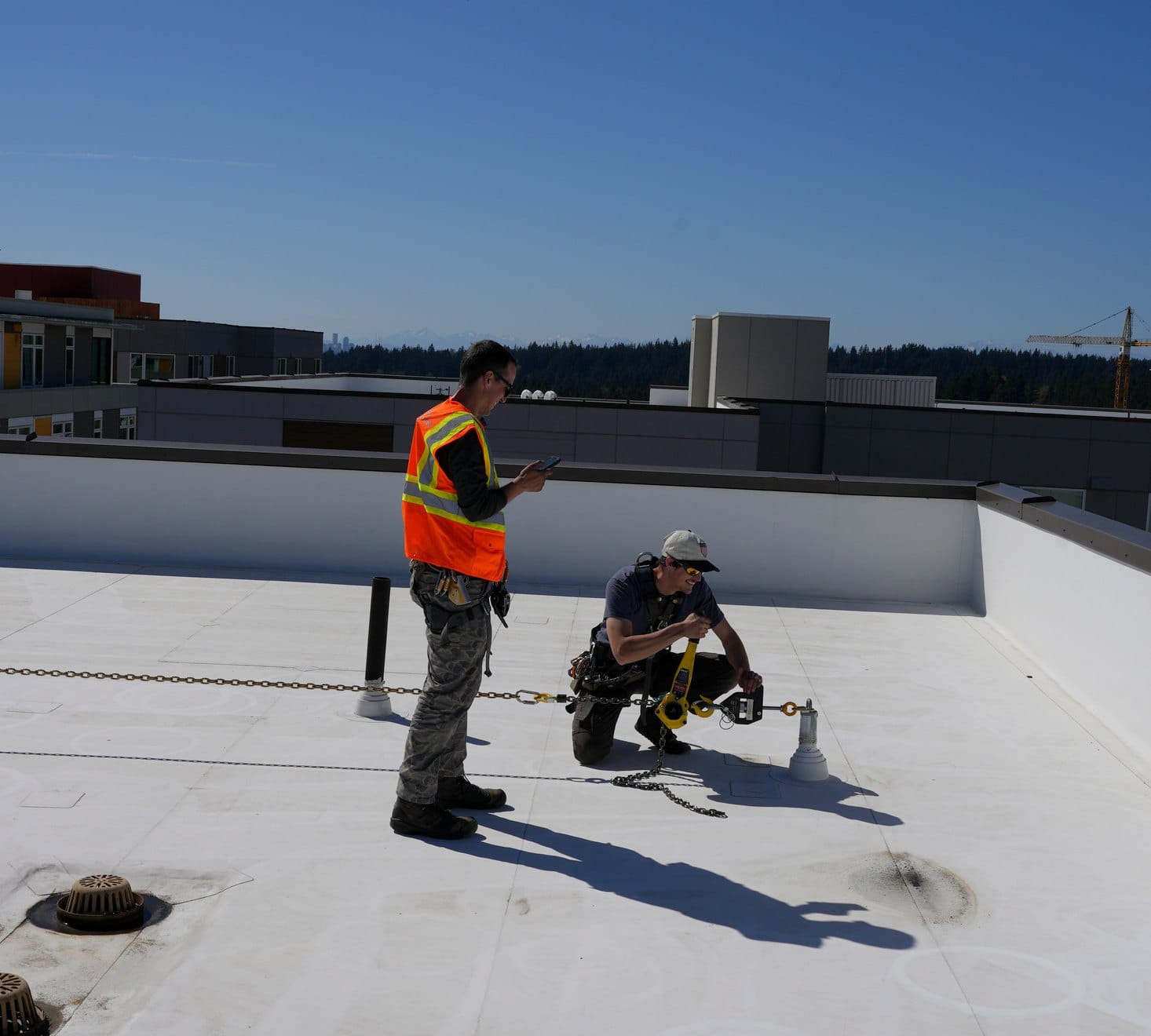
Every anchor and davit system requires ongoing attention to remain safe and compliant. ADS provides the full spectrum of services, from annual inspections that catch problems early, to load testing and recertification that verify structural performance, to engineer-stamped documentation.
When a building needs new or upgraded systems, our engineer-backed reports document exactly what is required so the work can be scoped and completed correctly.
We work with commercial office buildings, multifamily apartment complexes, hotels, hospitals, and mixed-use developments. Whether your building has ten anchors or two hundred, we apply the same thorough process and deliver the same quality of documentation. Our clients include property management companies overseeing multiple buildings across the Puget Sound region.
Don’t Wait for a Problem. Get Ahead of It.
Missing inspections, outdated certifications, or undocumented systems expose your building to real liability. Contact ADS for a free compliance consultation and find out exactly where your building stands.
Know Your Requirements Before You Need Them
OSHA and ANSI set clear standards for roof anchor inspection, testing, and documentation. Our compliance guide explains what’s required, when it’s due, and what building owners need to have on file.
Read the Compliance Guide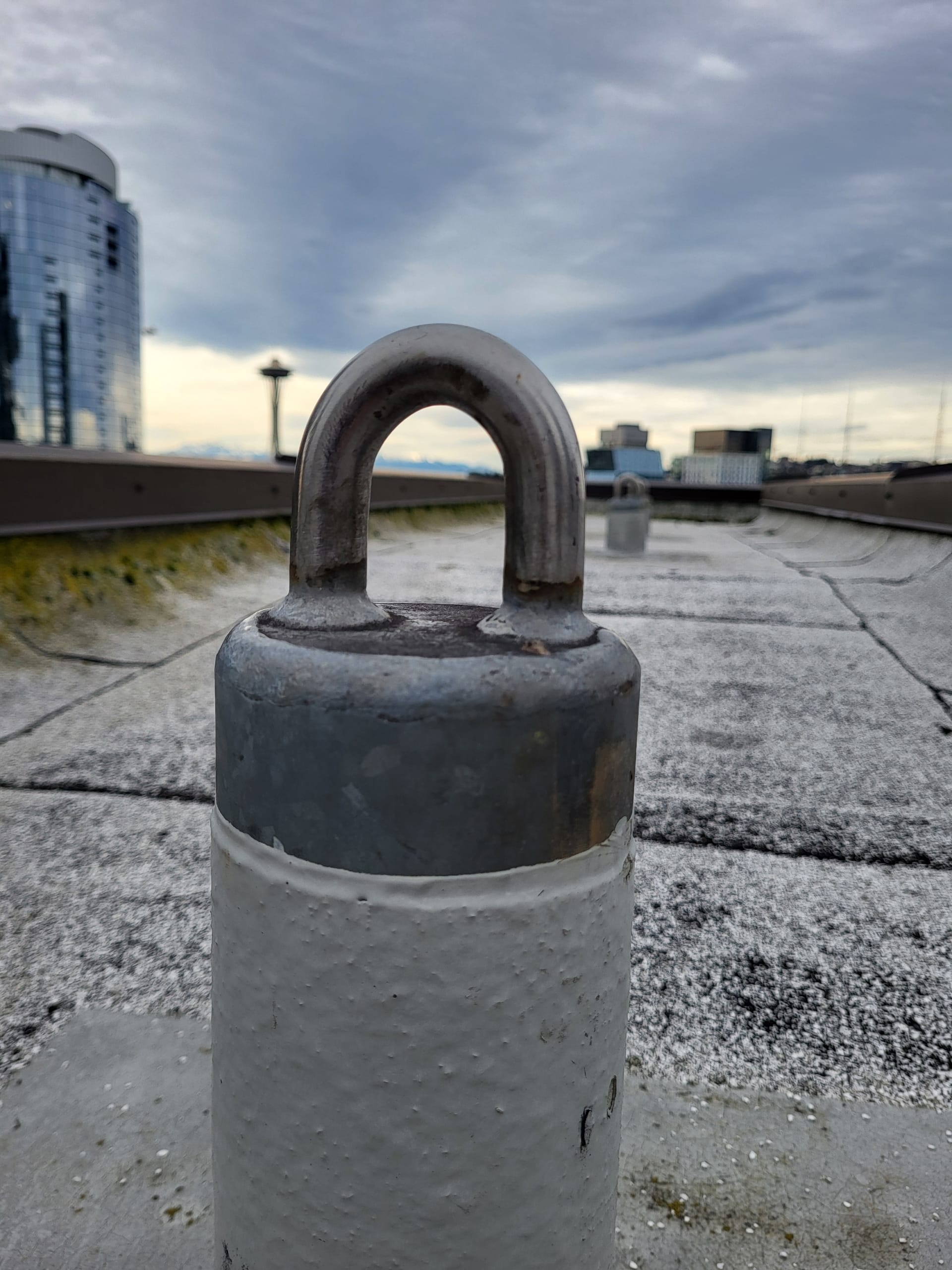
Anchor and Davit Inspection
OSHA 29 CFR 1910.27(b)(1) requires anchorages used with rope descent systems to be inspected annually and certified at least every 10 years by a qualified person, and ANSI Z359 standards call for annual inspection of fall arrest anchors by a competent person. This includes both fixed anchor points and davit systems: the swing-arm bases and portable davit cranes used to deploy scaffolding, bosun’s chairs, and window-washing platforms on mid- and high-rise buildings.
Davit bases, sockets, and arms are subject to the same environmental stresses as fixed anchors: corrosion, concrete deterioration, weld fatigue, and mechanical wear from repeated loading cycles. A failed davit system puts workers at the same risk as a failed anchor point. Our inspections cover both fixed anchors and davit systems, evaluating every component, tagging each with a unique identifier, and delivering detailed photographic documentation so you always have a current, compliance-ready record.
We also identify anchors that may have been damaged during roofing projects, HVAC installations, or other rooftop work. It is common for contractors to unknowingly disturb anchor connections while performing unrelated maintenance. Our inspections catch these issues before they become a safety or liability problem.
Load Testing & Recertification
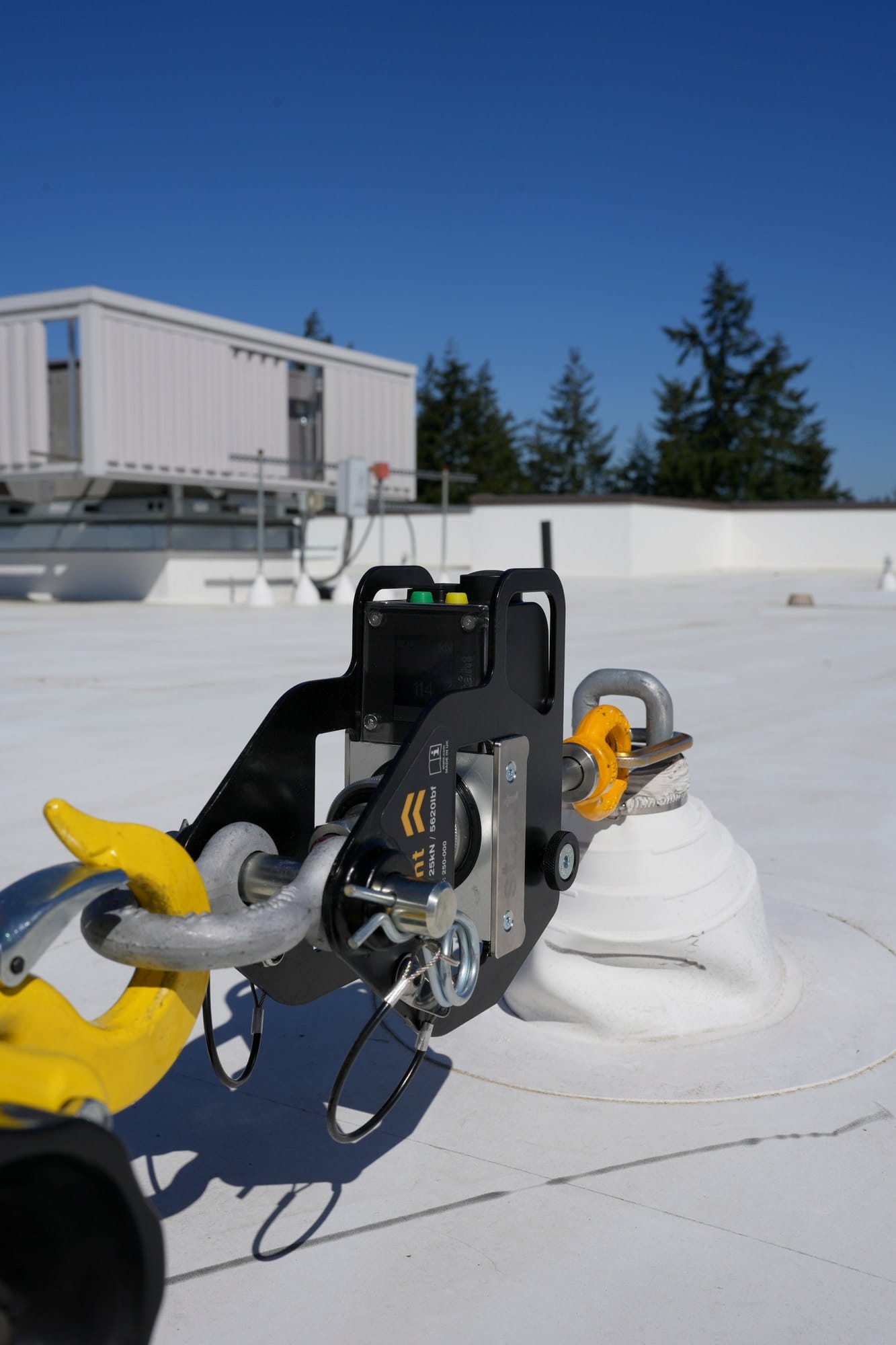
For anchorages used with rope descent systems, OSHA 29 CFR 1910.27(b)(1) requires recertification at least every ten years. Other anchor and davit types should follow periodic testing per the manufacturer’s instructions and ANSI/IWCA I-14.1 practice, and many systems should be recertified as often as every five years depending on factors like weather exposure, frequency of use, type of connection to the structure, and overall risk tolerance. A five-year cycle provides the highest confidence in your systems, limits building liability, and some manufacturer specifications require it. A visual inspection tells you what you can see. Load testing tells you what you can’t. Subsurface corrosion, concrete degradation, and weld micro-fractures only reveal themselves under controlled force. We apply calibrated hydraulic loads to each point, measure displacement and performance, and deliver detailed pass/fail reporting.
Recertification is the highest level of evaluation available, combining load testing with a comprehensive engineering review of the system’s original design, installation integrity, and current condition. The result is an engineer-stamped certification that satisfies OSHA, ANSI, insurance carriers, and building code requirements. Recertification may also be triggered by ownership changes, missing documentation, structural roof modifications, or systems that were never formally certified. ADS coordinates the entire process from field assessment through final stamped documentation.
Contact ADS
Tell us about your building or project and we'll be in touch within one business day.