

Load Testing & Recertification
OSHA 1910.27(b)(1) and ANSI/IWCA I-14.1 establish clear requirements for the ongoing load testing and recertification of roof anchor and davit systems. Staying ahead of these timelines isn’t optional. It’s what keeps your building compliant, insurable, and safe for anyone working at height. Even systems that appear intact on the surface can harbor hidden failures: corrosion beneath base plates, weakened substrates, and compromised welds that only reveal themselves under load. ADS tests every single anchor point using calibrated equipment and documented procedures, so your compliance is backed by real data.
Talk to a Safety SpecialistOur Load Testing Process
ADS load tests every single anchor and davit point in your system. No sampling, no shortcuts. We use calibrated hydraulic equipment to apply a controlled proof load to each point, measuring displacement and performance precisely. Each test is performed in accordance with manufacturer specifications and applicable OSHA and ANSI requirements.
After testing, we provide a detailed report including test method, applied loads, pass/fail results for every anchor, and observations about condition. Real data. Real accountability.
When Is Recertification Required?
For anchorages used with rope descent systems, OSHA 29 CFR 1910.27(b)(1) requires recertification at least every ten years. Other anchor types should follow periodic testing per the manufacturer’s instructions and ANSI/IWCA I-14.1 practice, and many systems should be recertified as often as every five years depending on weather exposure, frequency of use, type of connection to the structure, and overall risk tolerance. A five-year cycle provides the highest confidence in your systems, limits building liability, and some manufacturer specifications require it.
Recertification may also be triggered by changes in building ownership, missing or incomplete original documentation, structural modifications to the roof, or a system that was never formally certified.
Not sure which rules apply to your system? See our guide to rope descent, fall arrest, and fall restraint anchors, and our breakdown of what roof anchor inspection and testing cost.
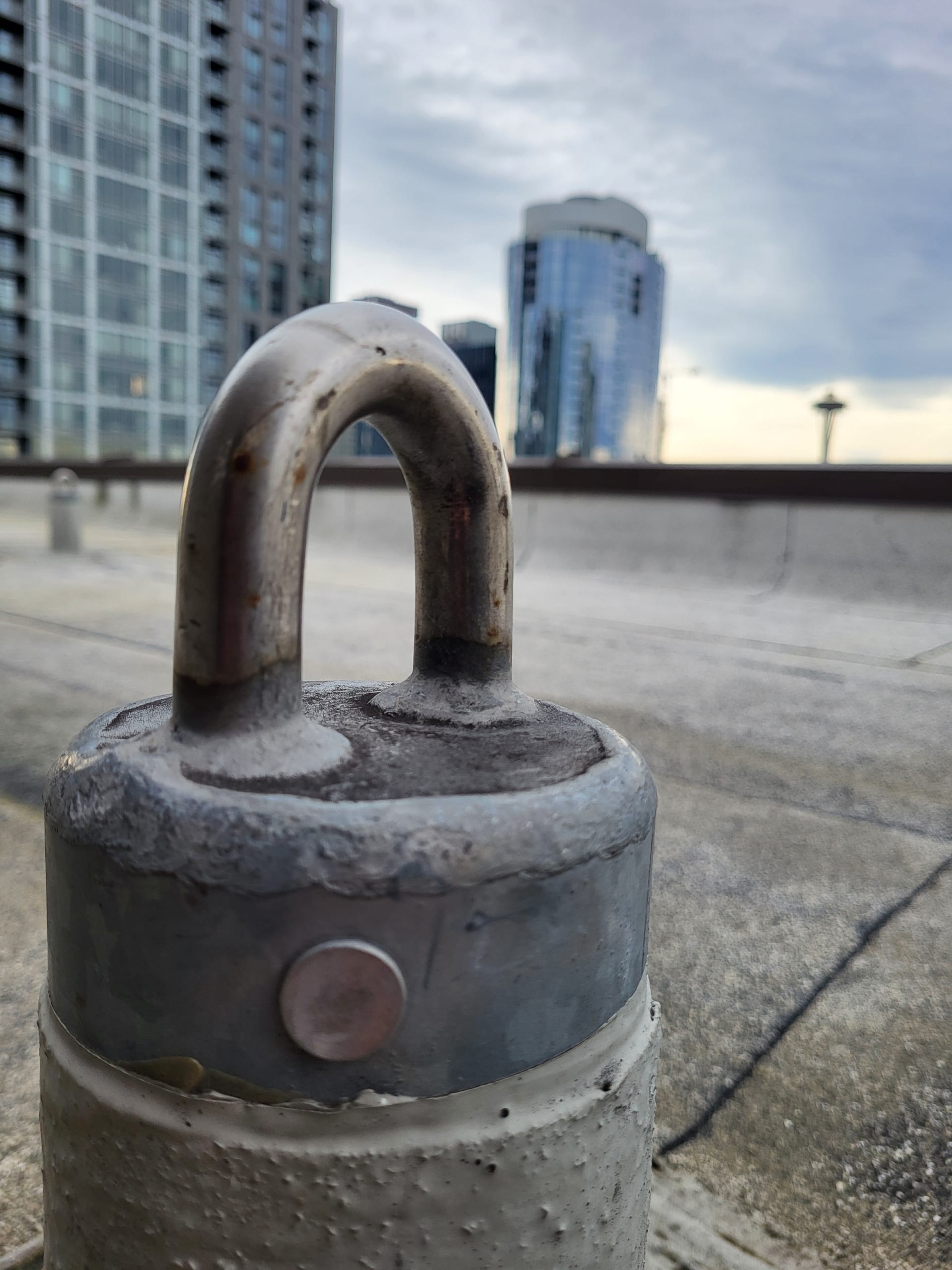
The Recertification Process
Recertification is the highest level of anchor system evaluation available. It starts with a thorough field assessment of every anchor and davit point, including visual inspection and load testing of every single anchor, not just a sample. We then compile our findings and coordinate with a licensed professional engineer who reviews the system design, evaluates the field data, and determines compliance.
Once approved, the engineer issues an engineer-stamped certification that satisfies OSHA, ANSI, insurance carriers, and building code requirements. These documents serve as your official record for regulatory agencies, insurance carriers, and contractors. ADS manages the entire process from field assessment through final stamped documentation.
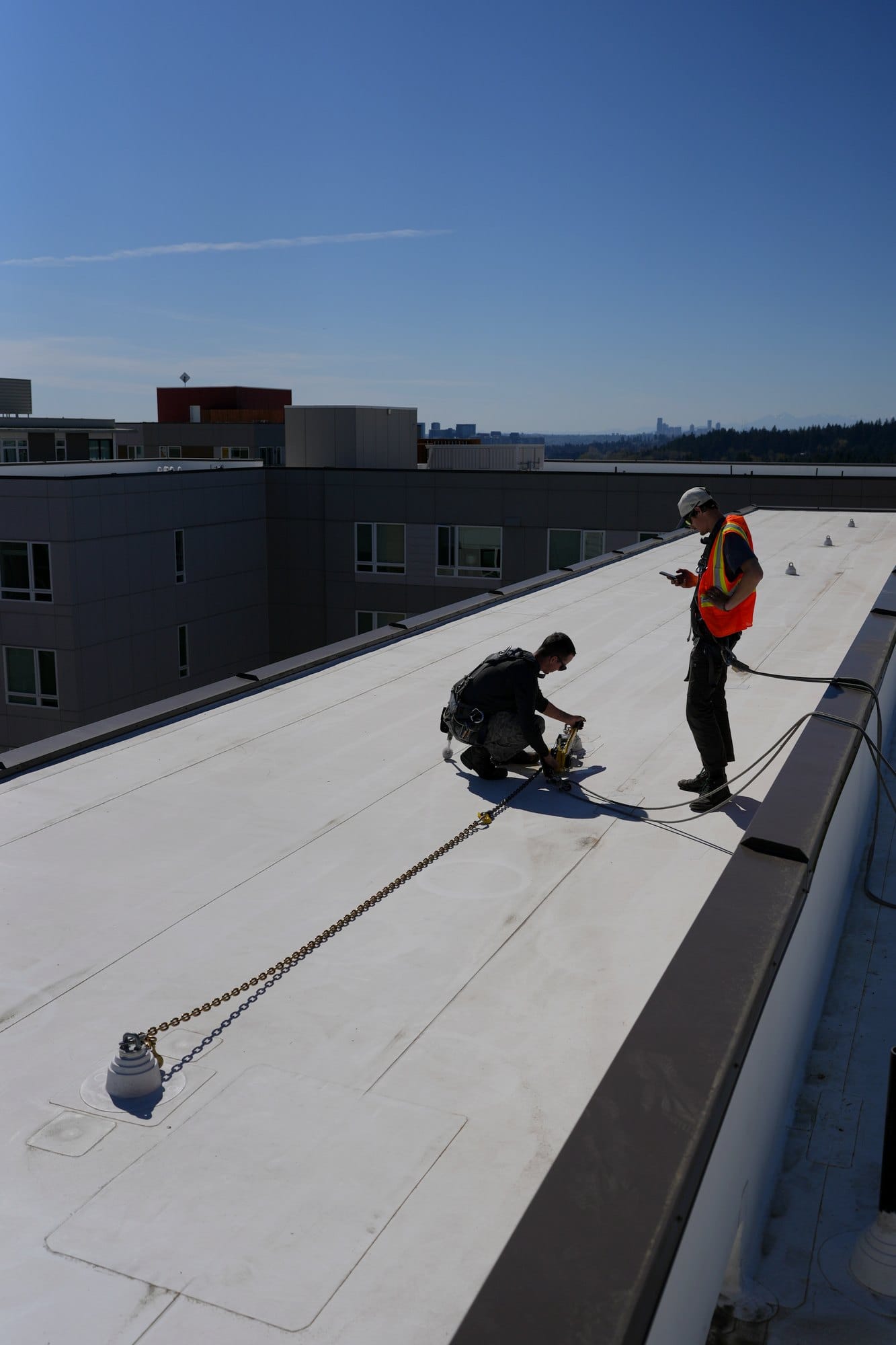
Long-Term Compliance & Liability Protection
Visual inspections are important, but they cannot tell you whether an anchor will hold under load. Subsurface corrosion, concrete degradation around embedded anchors, and micro-fractures in welds are all conditions that only reveal themselves under stress. Load testing closes this gap by applying real force and measuring real results on every single point in your system.
Engineer-stamped recertification documents carry weight with insurance carriers, regulatory bodies, and contractors in a way that inspection reports alone cannot. The engineering review also identifies design issues and wear patterns that reduce long-term maintenance costs. Whether your system is approaching its recertification cycle or you need certification for the first time, ADS manages the entire process.
Contact ADS
Tell us about your building or project and we'll be in touch within one business day.