

Seattle Buildings We Know
Seattle's construction boom over the past decade has produced some of the most distinctive high-rise buildings on the West Coast. Rainier Square Tower, the city's second-tallest building at 850 feet, features a unique tapered base design with complex rooftop anchor requirements. The 2+U tower in downtown, The Mark on Boren Avenue, and the Insignia Towers in South Lake Union are among the wave of residential high-rises built since 2015, all now within their first inspection and maintenance cycles.
South Lake Union's transformation from industrial waterfront to tech campus hub, driven by Amazon's headquarters expansion, has added dozens of commercial and mixed-use buildings to Seattle's anchor inspection inventory. The Dexter Station, 400 Westlake, and numerous Amazon campus buildings all require fall protection systems that must be professionally maintained.
Capitol Hill and First Hill continue to add mid-rise residential buildings at a rapid pace, while Ballard, the University District, and Roosevelt are seeing new mixed-use construction near light rail stations. Each new building adds to the growing demand for professional anchor inspection services in Seattle.
As our home base, Seattle is where we have the deepest relationships and the most experience. We know these buildings, we know the property management companies that run them, and we understand the specific challenges that Seattle's marine climate creates for every anchor system on every rooftop. We also serve property managers across the broader Pacific Northwest, including Portland and the I-5 corridor.
Seattle's Roof Anchor Specialists
Seattle's skyline has transformed over the past decade, with dozens of new high-rise residential towers, commercial buildings, and mixed-use developments. Each of these buildings depends on roof anchor systems for safe maintenance access, and every anchor system requires regular OSHA-compliant inspection, fall protection testing, and documentation to remain compliant.
ADS has been headquartered in Seattle since 2015. We know the buildings, we know the property management companies, and we understand the specific challenges that Seattle's climate creates for fall protection systems. From the high-rises of downtown and South Lake Union to the mid-rise apartments of Capitol Hill, Ballard, and the University District, we provide thorough, documented anchor services that keep your building safe and compliant.
Our team also provides rope access window cleaning, dryer vent maintenance, and pressure washing, all performed by trained technicians who understand Seattle roof anchor certification and building safety from the rooftop down.
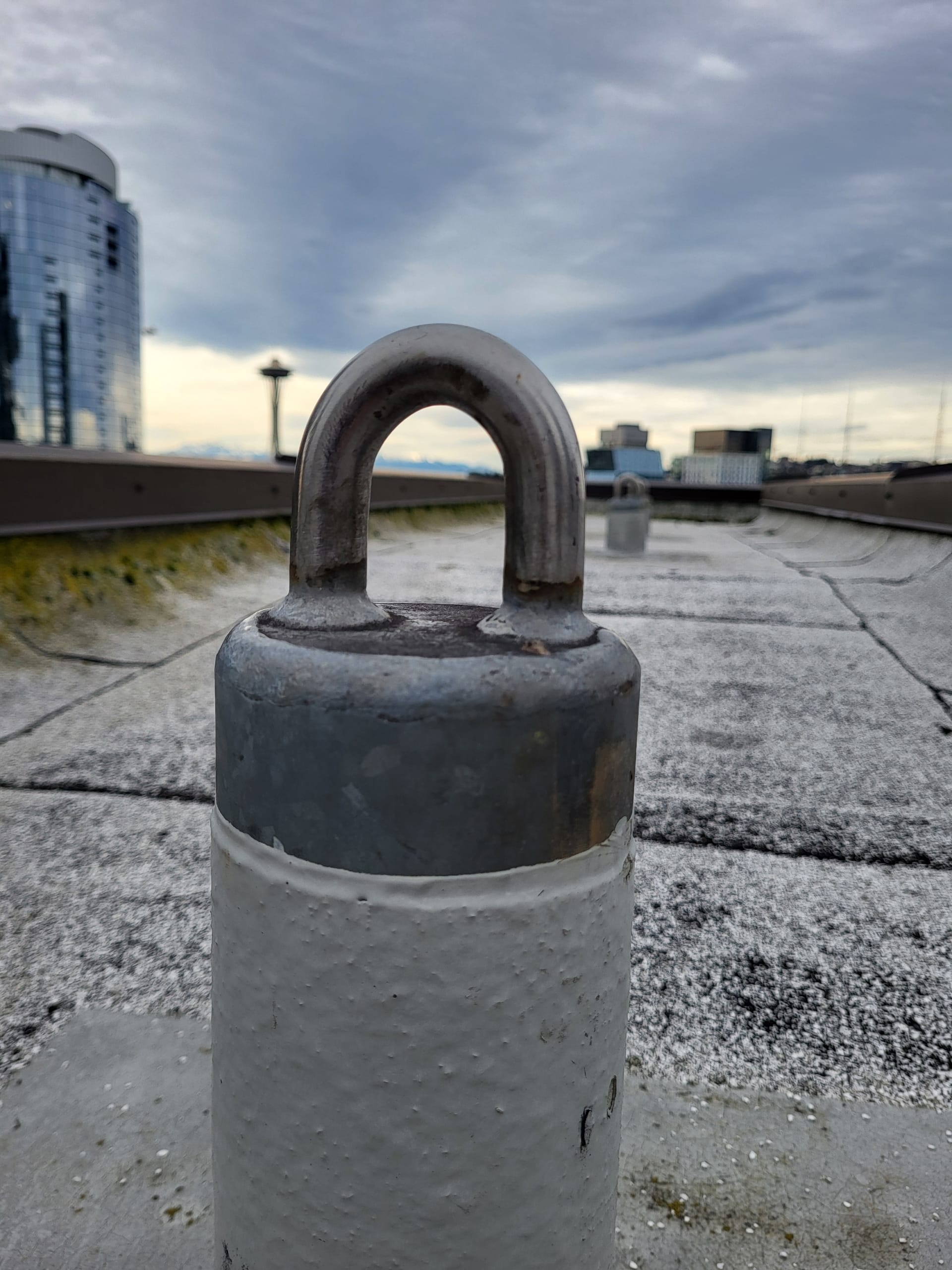
Why Seattle Buildings Need Expert Anchor Care
Seattle receives an average of 152 rainy days per year. That constant moisture, combined with marine salt air from Puget Sound, creates an aggressive corrosion environment for exposed metal hardware. Anchor bolts, base plates, and welded connections degrade faster here than in drier climates.
Add Seattle's seismic activity (the city sits in an active earthquake zone) and the structural integrity of anchor embedments becomes even more critical. Our inspectors evaluate not just the hardware itself, but the concrete and structural substrate that anchors depend on.
Seattle Neighborhoods We Serve
We work with property managers and building owners across greater Seattle:
Downtown / SLU
Capitol Hill
Ballard / Fremont
University District
First Hill / Central District
West Seattle
SODO / Georgetown
Northgate / Lake City
Seattle Compliance Requirements: What Property Managers Need to Know
Fall protection and roof anchor systems in Seattle are governed by a stack of overlapping regulations that most building owners don't fully realize apply to them:
- Federal: OSHA 29 CFR 1910.140 requires personal fall protection systems to be inspected before initial use during each workshift, and sets the strength requirements for the anchorages they connect to.
- Industry: ANSI/IWCA I-14.1 and ANSI Z359.18 set the industry benchmarks for anchor certification, including annual visual inspection and periodic load testing, while OSHA 29 CFR 1910.27(b)(1) requires recertification at least every ten years for rope descent system anchorages.
- Washington State: WAC 296-880 (under RCW 49.17, WISHA) gives the Washington State Department of Labor & Industries authority over workplace fall protection, with enforcement stricter in many cases than federal OSHA.
- City of Seattle: Seattle Department of Construction & Inspections (SDCI) requires documented inspection and certification records for rooftop anchors on any permitted commercial maintenance work.
Missing or lapsed documentation can halt scheduled maintenance projects, void general liability coverage, and create personal exposure for property managers and building owners.
For a detailed walkthrough of Seattle's anchor compliance timeline, including a checklist for 5-year and 10-year cycles, see our complete Seattle roof anchor compliance guide.
Tie Back Recertification: When Mid-2010s Seattle Buildings Come Due
Seattle's 2014 to 2018 construction boom produced thousands of mid-rise and high-rise buildings, almost all of which were equipped with rooftop tie back anchor systems for window washing, facade maintenance, and rope access work. Those anchors are now between 7 and 12 years old, and most are reaching their first 10-year roof anchor recertification deadline.
A tie back inspection by a qualified person is required every 12 months. A full roof anchor recertification is required at least every 10 years, and ADS pairs proof load testing of every anchor with a stamped letter from a licensed structural engineer. Most Seattle owners with buildings constructed in 2014 or 2015 are due for that recertification right now.
For a deeper walkthrough of what mid-2010s Seattle buildings need to know, see our guide to Seattle tie back recertification for the 2014 to 2018 building boom.
Seattle's Growing Skyline Means Growing Demand
Seattle has added more than 4,000 apartment units per year in recent years, with many of those in mid-rise and high-rise buildings that require anchor systems. The construction boom of the 2010s and early 2020s means thousands of buildings are now approaching their first 5-year load testing or 10-year recertification windows.
If your building was constructed between 2010 and 2020, now is the time to verify that your Seattle fall protection anchor system has been properly maintained and documented. Missing inspection records or lapsed certifications can delay maintenance projects, create liability exposure, and complicate insurance claims.
ADS provides free initial evaluations. Contact us to find out exactly where your building stands.
Seattle Roof Anchor Frequently Asked Questions
What is roof anchor certification, and how often is it required in Seattle?
Roof anchor certification is the process of confirming that a building's rooftop anchor system is rated for safe use. Under OSHA 29 CFR 1910.27(b)(1), anchorages used with rope descent systems require an annual inspection by a qualified person and certification at least every 10 years. Fall arrest anchors follow the manufacturer's instructions and ANSI Z359 standards. Seattle buildings constructed during the 2014 to 2018 boom are now reaching that 10-year deadline.
What is the difference between a tie back inspection and a recertification?
A tie back inspection is the annual check performed by a qualified person, with photographic documentation of every anchor on the roof. A recertification is performed at least every 10 years, and ADS recertifications include proof load testing of every anchor and a stamped letter from a licensed structural engineer. OSHA requires both the annual inspection and the 10 year certification for rope descent anchorages.
When does my Seattle building need anchor recertification?
If your building was constructed between 2014 and 2018, your original anchor system is approaching or past its 10-year recertification window. Most owners with mid-2010s buildings are due now. If your rope descent anchors are more than 10 years old and you do not have a current written certification on file, the building is overdue.
Does Washington state OSHA differ from federal OSHA on roof anchor requirements?
Washington operates its own state OSHA plan through the Department of Labor and Industries (L and I), with rules under WAC 296-880. WISHA enforcement on fall protection is generally as strict as federal OSHA, and in some areas stricter. Seattle building owners are subject to both federal OSHA standards and Washington state requirements.
Who can perform a roof anchor recertification in Seattle?
OSHA requires certification by a qualified person. ADS Contractors goes a step further: our qualified person performs the field inspection and proof load testing in Seattle, and a licensed structural engineer reviews the field data and issues a stamped certification letter.
Our Seattle Services
Annual Anchor Inspection
Yearly visual and structural inspection with photographic documentation.
10-Year Recertification
Stamped engineering review for rope descent system anchors hitting the federal 10-year deadline.
Tie Back Recertification
Engineering certification for rope descent and suspended access tie backs.
Hydraulic Load Testing
Instrumented load testing with documented hold times and a pass or fail record for each anchor tested.
Davit Inspection
Articulating davit arm and base inspection for high-rise window washing systems.
Window Cleaning
Rope access window cleaning for mid-rise and high-rise buildings.
Dryer Vent Cleaning
Inspection and cleaning for multifamily and commercial buildings.
Ready to Get Started?
Contact ADS today for a free evaluation. We will assess your building's fall protection systems and provide a detailed report with no obligation. Call us at (206) 338-2584.
Contact Us Today