

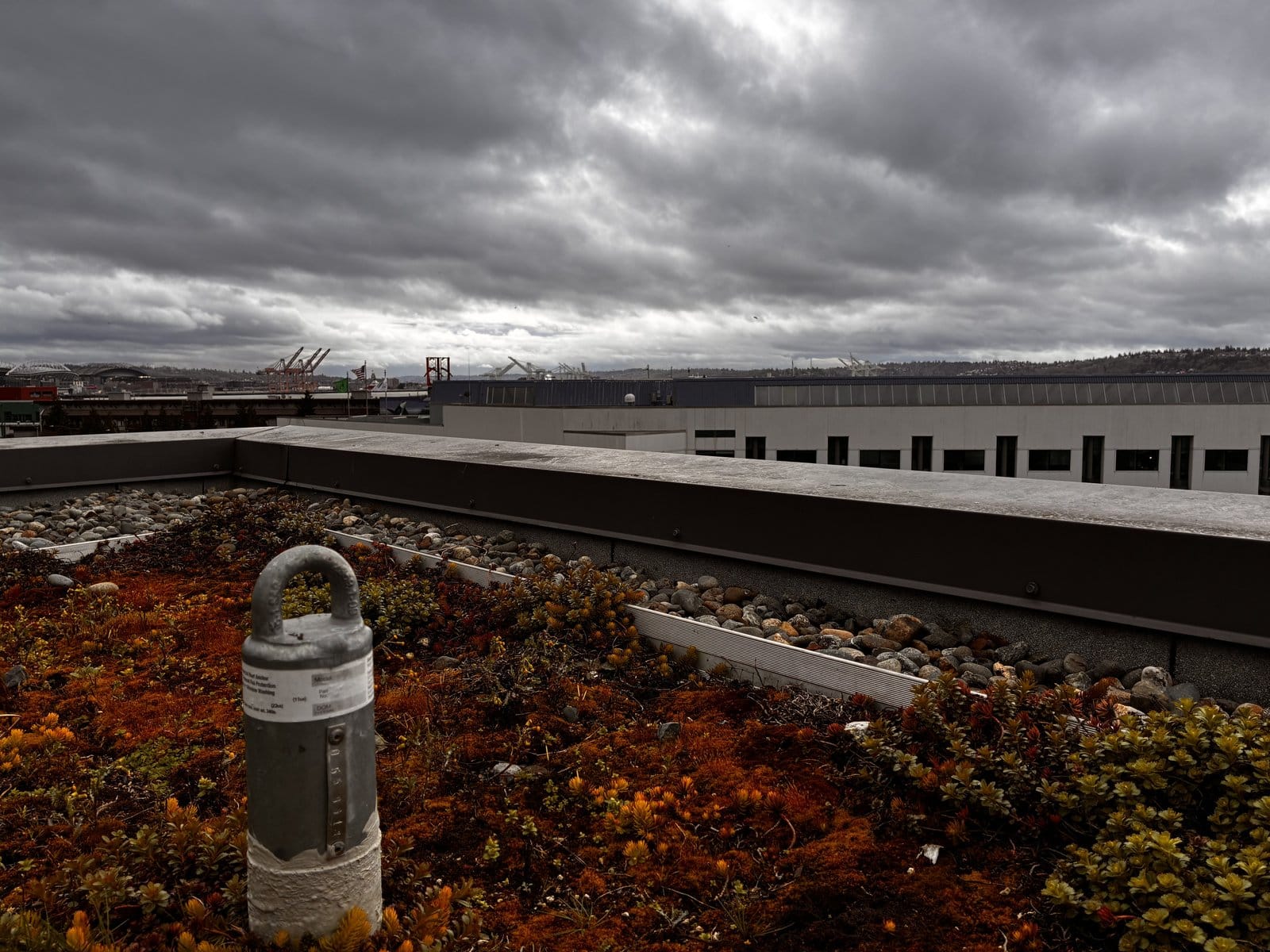
Denver Roof Anchors Answer Directly to Federal OSHA
Colorado is one of the states that never adopted its own occupational safety plan, a fact you can confirm on the federal OSHA state plans page. There is no Colorado agency interpreting fall protection rules for Denver buildings. The federal standards apply exactly as written, and they name the building owner, not the roofer or the window washing contractor, as the party responsible for the anchors.
Two rulebooks matter on a Denver roof. Personal fall arrest anchors, the points a roofer or HVAC technician clips into while walking the surface, sit under 29 CFR 1910.140. Rope descent anchorages, the tie backs that suspended workers rig from, sit under OSHA 29 CFR 1910.27(b)(1), which requires written certification, an annual inspection, and recertification at least every 10 years for each anchorage. Our roof anchor compliance guide walks through both in plain language, and our Colorado page covers how the federal regime plays out statewide.
Owners watching the state legislature should also know about HB 26-1054, a 2026 bill covered by Colorado Newsline, that would lock the federal occupational safety standards into Colorado law and add state enforcement with penalties up to $70,000 for willful violations. It is a pending bill, not law. The takeaway for a Denver owner is simple: nobody in Colorado is proposing a lighter regime, so an inspection record you build now only becomes more valuable.
What the Annual Inspection Covers
ADS Contractors serves building owners and property managers across the Denver metro with a documentation-first inspection scope:
- Full anchor inventory on a numbered roof plan, so each anchor carries a permanent ID that future inspections, tests, and repairs can reference.
- Hands-on inspection of each anchor: post, base plate, welds, fasteners, and any swaged or threaded hardware, checked for corrosion, cracking, deformation, and movement.
- Substrate review at each location, because an anchor is only as good as the concrete, steel, or wood it is fixed to.
- Flashing and sealant condition where each post penetrates the roof membrane, the detail Denver weather attacks first.
- Date-stamped photos of each anchor type and of any deficiency found.
- A signed competent person report with a pass, fail, or repair call for each anchor.
On cadence: for rope descent anchorages the annual inspection is written directly into 1910.27(b)(1). For fall arrest anchors there is no fixed federal calendar; the frequency comes from the manufacturer's instructions and the standard of care, and an annual competent person check is the baseline that insurers and safety consultants expect. Our national roof anchor inspection page explains the methodology in depth. This page covers what changes in Denver.
Why Denver Roofs Are Hard on Anchor Hardware
Denver's climate is genuinely different from the coastal markets where most anchor guidance gets written, and each difference lands on the roof:
- Freeze-thaw cycling. A sunny winter afternoon followed by a hard overnight freeze is routine here. Water that finds a hairline gap in sealant expands as it freezes, and over dozens of cycles a season it can work anchor bases loose and crack the grout or concrete around them.
- Hail. The Front Range is one of the most hail-prone metro corridors in the country. Hail bruises the membrane around anchor posts, chips protective coatings, and cracks caulk joints, opening corrosion paths that stay invisible from a distance.
- Snow load and spring melt. Snow that sits against anchor bases for weeks keeps the penetration detail wet exactly where water does the most damage.
- High-altitude UV. At a mile of elevation, UV exposure is measurably stronger, and sealants and coatings embrittle years earlier than the same products at sea level.
None of these kills an anchor in one season. The point of an annual inspection in this climate is to catch a $200 sealant repair before it becomes a failed substrate, a corroded base, or a do-not-use tag the week your facade work is scheduled.
What Denver Owners Receive
Every annual inspection ADS performs produces the same owner-ready package: a numbered roof plan, a line-item status for each anchor, photographs of anything deficient, and a signed inspection report you can hand to any contractor, insurance carrier, or buyer's due diligence team the day they ask.
The report also tells you what happens next. If an anchor fails visually, you get a repair path. If its history is unknown, we recommend hydraulic load testing to verify capacity. If your rope descent anchorages are approaching the federal 10-year deadline, the inspection feeds directly into a full recertification so you are not paying for the same field work twice.
We write for the person who carries the liability and signs the capital budget: the owner. Property managers get a document they can forward without translation. For a deeper Denver walkthrough, read our Denver building owner's guide to roof anchor inspections.
Denver Roof Anchor Inspection FAQ
How often do roof anchors need to be inspected in Denver?
Rope descent anchorages must be inspected at least annually under OSHA 29 CFR 1910.27(b)(1), with a full recertification at least every 10 years. Fall arrest anchors under 1910.140 have no fixed federal interval; the cadence comes from the manufacturer's instructions and the standard of care, and an annual competent person inspection is the accepted baseline. Colorado has no state plan, so these federal rules apply directly in Denver.
Does Colorado have its own OSHA program?
No. Colorado never adopted a state plan, so federal OSHA has direct jurisdiction over private workplaces in Denver. A pending 2026 bill, HB 26-1054, would write the federal standards into Colorado law and add state-level penalties up to $70,000 for willful violations. It has not passed, but it signals that Colorado is moving toward more oversight of workplace safety, not less.
Can hail actually damage a roof anchor?
Yes, though rarely in one storm. Hail chips coatings, cracks sealant, and bruises the membrane around anchor penetrations. The damage that matters is what follows: water enters the opened joint, freeze-thaw cycles widen it, and corrosion starts where nobody can see it. After a major hail event we recommend having anchor penetrations checked along with the roof itself.
What will my window washing vendor ask to see?
Written certification that each rope descent anchorage supports at least 5,000 pounds per attached worker, plus a current annual inspection record. Their technicians cannot legally tie off to your roof until you provide that paperwork, so vendors ask for it before they schedule. Owners with the documents on file keep their facade work on calendar; owners without them wait.
Our Denver Anchor Services
Annual Anchor Inspection
Yearly competent person inspection with photos and a numbered roof plan.
10-Year Recertification
Stamped engineering recertification for anchorages reaching the federal deadline.
Tie Back Recertification
Certification for the rope descent tie backs suspended workers rig from.
Hydraulic Load Testing
Hydraulic pull testing with documented hold times, pass or fail recorded.
Davit Arm Inspection
Arm, base, and socket inspection for suspended access davit systems.
All Denver Services
Visit the Denver hub for an overview of every service in the metro.
Ready to Get Started?
Contact ADS Contractors for a free evaluation of your building's roof anchor systems. We will review your documentation, scope the work, and provide a clear quote with no obligation.
Contact Us Today