

Denver's Boom-Era Towers Are Hitting the 10-Year Deadline
Think back to what got built around Union Station, through LoDo, and up into RiNo in the middle of the last decade. That construction cycle put up a large cohort of Denver towers whose rope descent anchorages went in between roughly 2014 and 2017, were certified at installation, and have been quietly aging ever since.
Under federal rules, that original certification does not last forever. Anchorages certified in 2014 came due in 2024. The 2015 installs came due in 2025. The 2016 and 2017 cohorts are due in 2026 and 2027. If you own or manage one of these buildings, the recertification window is not approaching. It is open now.
Many of these towers have also traded hands since completion, and anchor certifications are one of the documents that reliably go missing in a sale. If you cannot put your hand on a stamped certification letter dated within the last 10 years, treat the building as due. Our Denver services hub shows how recertification fits alongside the annual inspection cycle.
What OSHA 29 CFR 1910.27(b)(1) Requires of Owners
The federal rope descent system rule, OSHA 29 CFR 1910.27(b)(1), places the duty squarely on the building owner: identify, test, certify, and maintain each RDS anchorage so it is capable of supporting at least 5,000 pounds per attached worker, back that up with written certification, have the anchorages inspected annually, and recertify at least every 10 years.
Colorado adds a twist that surprises many owners: there is nothing between you and the federal government. The state has no OSHA plan of its own, as the federal state plans list confirms, so 1910.27(b)(1) applies in Denver exactly as drafted. Our Colorado overview covers the statewide picture.
The legislature may soon raise the stakes. HB 26-1054, reported by Colorado Newsline, would fix the federal standards in state law and create Colorado enforcement authority with penalties reaching $70,000 for willful violations. It remains a bill, and it may change before any vote, but it points one direction: owners who assumed Colorado would stay hands-off should not build a compliance plan on that assumption.
How Recertification Works, Field Data to Stamped Letter
Recertification is a deeper exercise than the annual inspection, and it produces a different document:
- Records and drawings review. We start with whatever exists: original installation submittals, prior certifications, roof plans, and repair history.
- Field inventory. Each anchorage is located, numbered, and mapped, including concealed or painted-over anchors the drawings never mention.
- Condition inspection. Hardware, welds, fasteners, and the substrate connection are checked against the manufacturer's installation requirements.
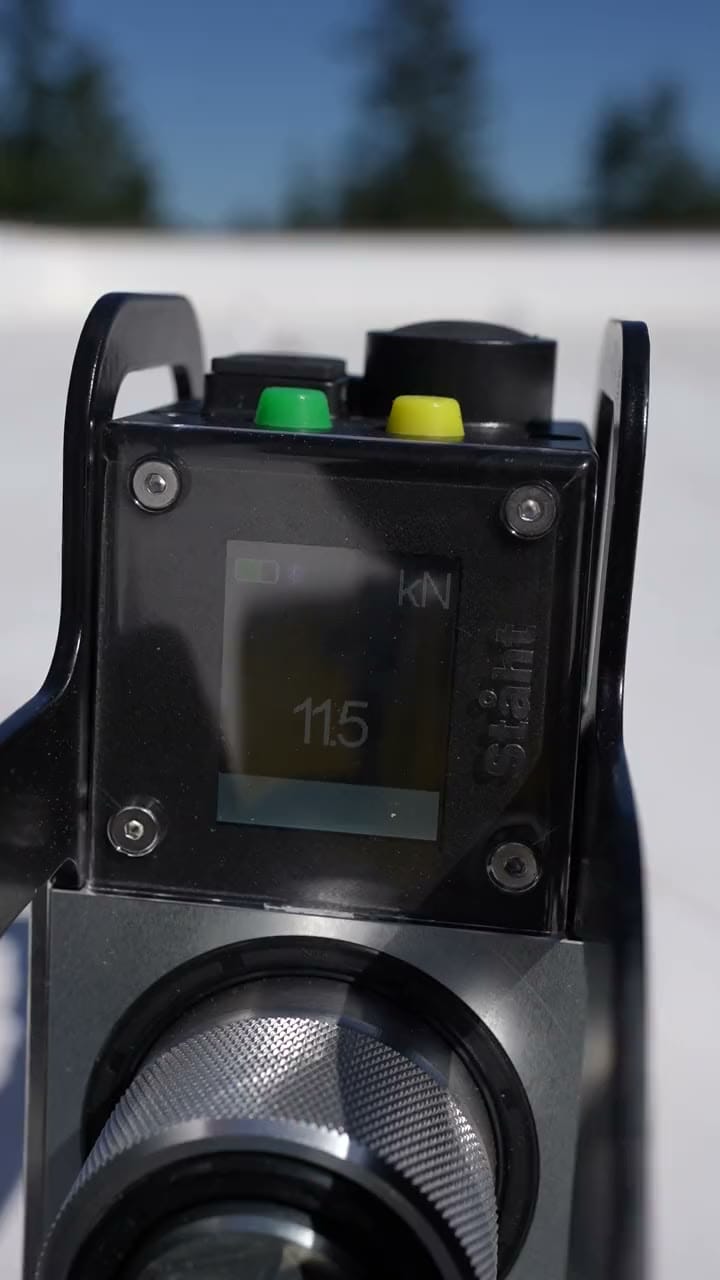
- Hydraulic load testing. Anchorages are load tested to the levels specified by the anchor manufacturer and applicable standards, with documented hold times and a recorded result for each test.
- Engineering review. A licensed structural engineer reviews the field data and issues a stamped recertification letter, the document 1910.27(b)(1) expects you to hold for the next 10 years.
Between recertifications, the annual inspection keeps the file current. If your building also has dedicated window washing tie backs, our tie back recertification page covers that system in detail, and the national roof anchor recertification page explains the engineering methodology we follow in every market.
Why This Lands on the Owner's Desk
Recertification is an owner decision because the rule names the owner, the liability follows the deed, and the spend usually needs capital approval rather than a maintenance line item. Property managers move the project along, but the signature that matters belongs to ownership.
There is a practical trigger too. When your facade contractor's scheduler asks for anchor certification before the spring window washing rotation, an expired letter stops the job. The certification is what lets suspended work proceed lawfully, so the missing document becomes an operational problem on exactly the week you need it not to be.
One more Denver reality: search for this service here and most of what comes back is location pages from firms in other regions. ADS Contractors is a roof anchor certification specialist that serves Denver building owners and property managers with the same documentation-driven process behind our roof anchor compliance guide. For the local context, start with the Denver building owner's guide.
Denver Roof Anchor Recertification FAQ
When is my Denver building due for recertification?
Count 10 years from the date on your last certification letter, which for many Denver towers is the original installation certification. Buildings with anchorages installed between 2014 and 2017, the Union Station and RiNo construction cycle, come due between 2024 and 2027. If no certification letter can be found, the building should be treated as due now.
How is recertification different from the annual inspection?
The annual inspection is a qualified person condition check that keeps the certification valid. Recertification is the 10-year renewal of the certification itself: field verification, load testing, and review by a licensed structural engineer, ending in a stamped letter. An annual inspection cannot substitute for recertification, and an expired certification cannot be cured by another inspection.
Who signs the recertification?
A licensed structural engineer reviews the inventory, inspection findings, and load test results, and issues the stamped recertification letter. ADS coordinates the full process, performs the field work, and assembles the documentation package the engineer relies on, so the owner receives one complete file rather than three vendors' loose ends.
What if we have no anchor records at all?
Common in Denver, especially after a sale. Recertification does not require the old paperwork; it rebuilds it. The field inventory locates and numbers each anchorage, testing verifies capacity, and the resulting package becomes the building's record going forward. Missing history makes the first cycle slightly longer, not impossible.
Our Denver Anchor Services
Annual Anchor Inspection
Yearly competent person inspection with photos and a numbered roof plan.
10-Year Recertification
Stamped engineering recertification for anchorages reaching the federal deadline.
Tie Back Recertification
Certification for the rope descent tie backs suspended workers rig from.
Hydraulic Load Testing
Hydraulic pull testing with documented hold times, pass or fail recorded.
Davit Arm Inspection
Arm, base, and socket inspection for suspended access davit systems.
All Denver Services
Visit the Denver hub for an overview of every service in the metro.
Ready to Get Started?
Contact ADS Contractors for a free evaluation of your building's roof anchor systems. We will review your documentation, scope the work, and provide a clear quote with no obligation.
Contact Us Today