

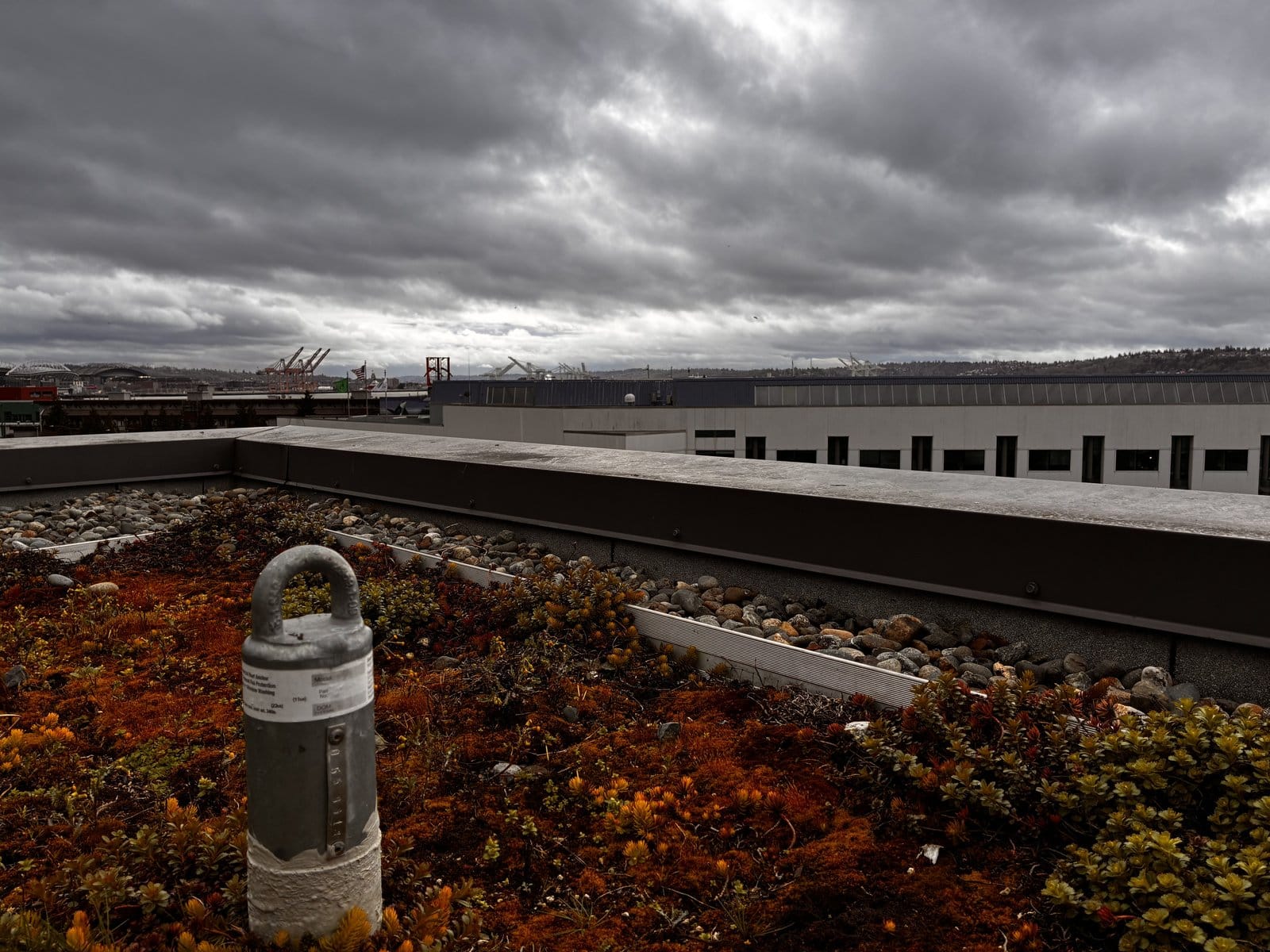
The Yearly Check That Keeps a Las Vegas Roof Documented
A Las Vegas rooftop is one of the hardest places in the country to be a piece of safety hardware. The valley sees more than 300 days of sun a year, summer surface temperatures on a dark roof can climb past 160°F, and the ultraviolet load steadily breaks down the coatings and sealants that protect anchor posts and base plates. Then the monsoon arrives. From July through September, microbursts, dust storms, and wind-driven debris put sudden, unplanned loads on hardware that spent the previous nine months baking.
An annual roof anchor inspection is the routine, documented confirmation that each anchor on the roof is still fit for use. For rope descent anchorages, the ones suspended window cleaning and facade work depend on, an annual inspection by a qualified person is written directly into OSHA 29 CFR 1910.27(b)(1). For general fall arrest anchors, the inspection cadence comes from the anchor manufacturer and the standard of care reflected in ANSI Z359.2. Either way, the practical rhythm is the same: a qualified inspection every 12 months, with a report you can put in front of any vendor, insurer, or safety officer who asks.
ADS Contractors serves building owners and property managers in Las Vegas with the same documentation-driven inspection process it has refined on Seattle high-rises since 2015. The full inspection scope is described on our national roof anchor inspection page; this page covers what changes when the roof in question is in the Mojave.
What the Inspection Covers on a Desert Roof
The mechanics of a sound anchor inspection are consistent anywhere: identify, examine, document. What shifts in Las Vegas is where the problems hide. Our inspection scope includes:
- A labeled roof plan. Each anchor gets a permanent ID on a plan of the roof, so results can be compared year over year and vendors can see exactly which anchors are cleared for use.
- Hardware condition, anchor by anchor. Posts, base plates, welds, fasteners, and connection points are examined for corrosion, fatigue cracking, and deformation, including elongated bolt holes and fasteners worked loose by daily expansion and contraction cycles.
- Sealant and coating condition. UV exposure chalks coatings and embrittles the sealant boots around anchor penetrations. A cracked boot is both a water path into the deck and an early warning that the installation is aging faster than its paperwork.
- Post-monsoon damage screening. Impact marks from wind-driven debris, grit abrasion on galvanized surfaces, and ponding or scouring around anchor bases after storm events.
- Substrate review. The concrete, steel, or wood each anchor is fastened to, checked for spalling, cracking, and moisture staining around embedments.
- A signed report with photos. Pass, fail, or repair status for each anchor, date-stamped photographs, and a summary an owner can forward without explanation.
Most findings on desert roofs are not dramatic. They are slow: a boot that cracked two summers ago, a fastener backing out a quarter turn a year. Annual documentation is what catches slow problems while they are still cheap.
Nevada Runs Its Own Safety Plan. The Paperwork Is Still the Point.
Nevada is one of the states with its own OSHA-approved state plan. Workplace safety rules here are administered by Nevada OSHA, part of the state Division of Industrial Relations and run from Las Vegas rather than a distant federal agency. The state adopts federal fall protection requirements through NAC 618, which means 1910.27(b)(1) and its anchorage certification requirements apply to Las Vegas buildings the same way they do anywhere in the country.
Citations are real. Nevada OSHA's maximum penalty for a serious violation rose to $16,550 in January 2025. But a fine is rarely what brings owners to us. The stronger forces are quieter: the liability an owner carries the moment a suspended worker clips into an uncertified anchor, the insurance carriers that ask for inspection records at renewal, and the window cleaning vendors whose technicians cannot legally tie off until the owner provides written certification. When the paperwork lapses, facade work stalls, and the building's maintenance calendar stalls with it.
For a plain-language walkthrough of the full rule set, see our roof anchor compliance guide. Statewide requirements and coverage are on the Nevada page.
Scheduling Inspections for Buildings That Never Close
Hospitality and gaming properties run around the clock, and their facilities teams plan rooftop work in narrow windows that cannot slip. Anchor inspection suits that reality: it is roof-level work, it does not touch guest areas, and it can be scheduled for early morning hours, which in a Las Vegas summer is also when rooftop temperatures allow the most careful work.
The market is bigger than the resort corridor. Summerlin and Henderson have added a generation of mid-rise office, medical, and multifamily buildings, and much of that construction dates to the mid-2010s. The rope descent anchorages on those roofs are now entering the 10-year recertification window, and the annual inspection is usually where the gap gets discovered. When an inspection turns up anchorages with no current certification, the path forward runs through roof anchor recertification and, where records are missing, hydraulic load testing.
Owners carry the liability and approve the budget, so our reports are written for owners first: plain findings, clear photos, and a specific recommendation. Property managers get what they need too, a document they can hand to any vendor without a follow-up call.
Las Vegas Roof Anchor Inspection FAQ
How often do roof anchors need to be inspected in Las Vegas?
Rope descent anchorages, the anchors used for suspended window cleaning and facade work, require inspection at least annually under OSHA 29 CFR 1910.27(b)(1), which Nevada adopts through NAC 618. For general fall arrest anchors, the cadence comes from the anchor manufacturer and the standard of care, which in practice also means a documented inspection every 12 months.
Does Nevada have its own OSHA?
Yes. Nevada operates an OSHA-approved state plan through Nevada OSHA, part of the Division of Industrial Relations, administered from Las Vegas. NAC 618 adopts the federal fall protection standards, so the anchor rules that apply nationally apply in Nevada, with state-level enforcement.
Will an anchor inspection disrupt a resort or gaming property?
No. The work happens at roof level, away from guests, and is scheduled to the property's quiet windows. Most inspections are completed in a single visit, and the deliverable is documentation, not downtime.
What happens if an anchor fails the inspection?
It is tagged do not use, photographed, and flagged in the report with a recommended repair or replacement path. The rest of the system usually remains available, and the labeled roof plan shows vendors exactly which anchors are cleared while repairs are scheduled.
Our Las Vegas Anchor Services
Annual Anchor Inspection
Yearly documented anchor checks with photos, built for desert wear patterns.
10-Year Recertification
Engineering recertification for rope descent anchorages reaching the federal deadline.
Tie Back Recertification
Written certification for the tie backs that suspended facade work depends on.
Hydraulic Load Testing
Anchor capacity verified to manufacturer and standard specified levels, hold times documented.
Davit Arm Inspection
Arm and base socket inspection for suspended access systems on high-rise towers.
All Las Vegas Services
Back to the Las Vegas hub for an overview of everything ADS brings to the market.
Ready to Get Started?
Contact ADS Contractors for a no-obligation review of your building's anchor documentation. Call the Las Vegas line at (725) 255-9967 or reach us through the contact page and we will take it from there.
Contact Us Today