

Recertification Is an Engineering Event, Not a Walkthrough
An annual inspection answers a simple question: is each anchor still in usable condition? Recertification answers a harder one: can this anchorage still be certified, in writing, to carry the loads the law assumes? The first is a trained visual and physical check. The second combines records review, field verification, load testing, and a written certification reviewed and signed by a licensed structural engineer.
The requirement that drives recertification is OSHA 29 CFR 1910.27(b)(1), the rope descent system rule. It requires building owners to identify, test, certify, and maintain each RDS anchorage so it is capable of supporting at least 5,000 pounds per attached worker, with written certification, annual inspection, and recertification at least every 10 years. That 10-year clock applies specifically to rope descent anchorages, the tie backs suspended window cleaning depends on. General fall arrest anchors are governed by 1910.140, which sets no fixed 10-year federal cadence; their inspection rhythm comes from the manufacturer and the standard of care, and many owners simply align both systems on the same documentation cycle.
If you are looking for the yearly check rather than the engineering cycle, that is our annual anchor inspection service. The national overview of this service lives on our roof anchor recertification page.
The Mid-2010s Las Vegas Building Wave Is Coming Due
Las Vegas built aggressively through the mid-2010s: resort-corridor towers, Summerlin commercial and medical campuses, Henderson multifamily and mixed-use mid-rises. Most were fitted with rope descent anchorages during construction, and those anchorages were certified at installation. A certification issued in 2015 or 2016 is now at or past the end of its 10-year life.
Owners rarely notice the date. What they notice is a window cleaning bid that comes back with a condition attached: provide current anchor certification before work can be scheduled. The vendor is not being difficult. Under the rope descent rule, their technicians cannot legally rig to an anchorage the owner has not certified in writing. An expired letter has the same practical effect as no letter at all.
Ownership and management changes make this worse. Buildings in this market change hands often, records stay behind with the old manager, and the new team inherits a roof full of steel with no paperwork. Recertification is how the paper trail gets rebuilt.
What the Recertification Package Contains
Recertification work in Las Vegas follows the same sequence ADS uses on Pacific Northwest high-rises:
- Records review. Original engineering drawings, installation records, and prior certifications, when they exist, are collected and reconciled against what is actually on the roof.
- Field verification. Each anchorage is located, labeled on a roof plan, and inspected for corrosion, fatigue, weld integrity, and substrate condition. Desert roofs get specific attention at sealant boots and embedments, where UV degradation and monsoon moisture intrusion do their quiet work.
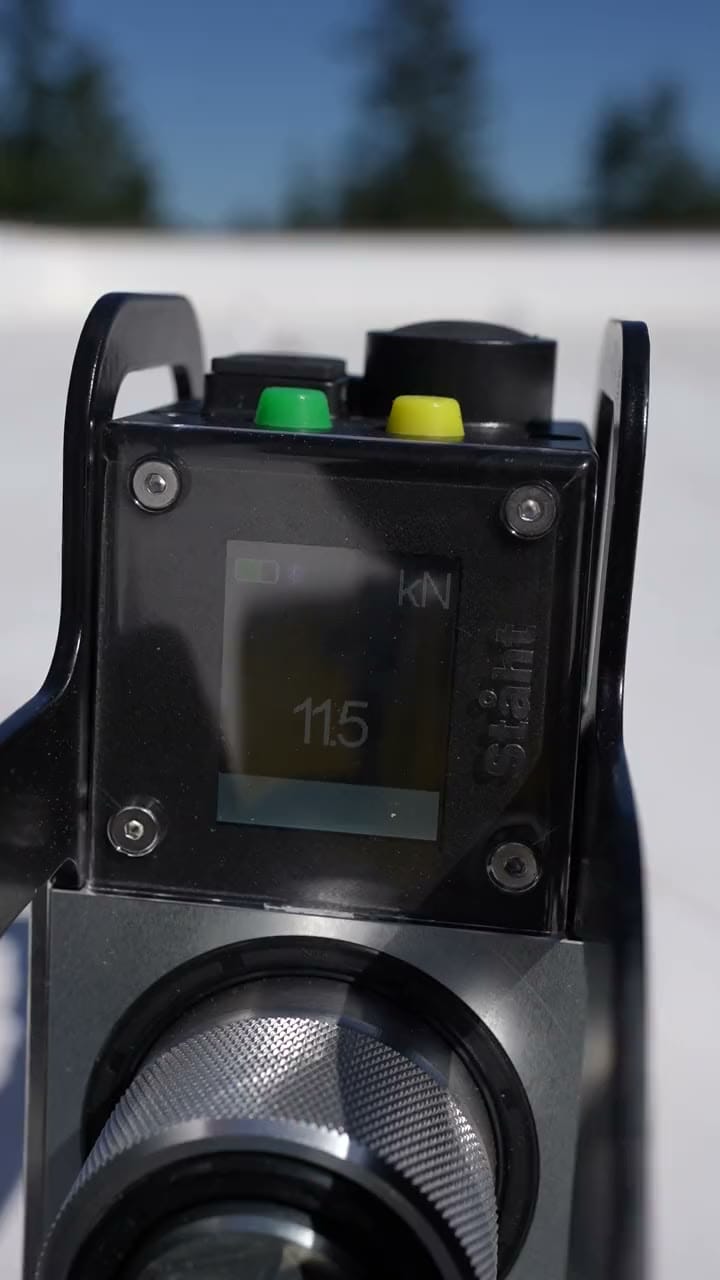
- Hydraulic load testing. Every anchorage in the system is load tested to the levels specified by the anchor manufacturer and applicable standards, with documented hold times. Details are on our load testing page.
- Engineering review. A licensed structural engineer reviews the field data and test results and issues the written certification the rule requires.
- An owner-ready file. Labeled roof plan, per-anchorage results, photographs, test documentation, and the certification letter, assembled so it can be handed to a vendor or insurer as-is.
The deliverable is not a stack of forms. It is a defensible position: evidence, reviewed by a licensed structural engineer, that your building can put in front of anyone who asks.
How Nevada Applies the Rule, and Who Actually Asks for the Letter
Nevada runs its own OSHA-approved state plan, administered by Nevada OSHA under the Division of Industrial Relations from Las Vegas. Federal fall protection requirements, including 1910.27(b)(1), apply here through NAC 618. The state's maximum penalty for a serious violation reached $16,550 in January 2025.
In practice, though, the letter is requested far more often by the market than by the state: insurers at renewal, counsel during a sale, facade vendors before mobilizing, lenders during refinancing. The certification is an asset document as much as a compliance one. Owners who keep it current keep their maintenance calendar, their vendor pricing, and their liability posture intact.
ADS Contractors brings its documentation-driven certification process to Las Vegas buildings of every profile, from the resort corridor to Henderson mid-rises. The wider rule set is explained in our roof anchor compliance guide, and statewide coverage is on the Nevada page.
Las Vegas Roof Anchor Recertification FAQ
Is the 10-year anchor recertification required in Nevada?
Yes, for rope descent anchorages. Nevada adopts the federal fall protection standards through NAC 618, which includes OSHA 29 CFR 1910.27(b)(1) and its requirement for written certification, annual inspection, and recertification at least every 10 years.
Which anchors does the 10-year rule cover?
The 10-year recertification requirement applies to rope descent system anchorages, the tie backs used for suspended window cleaning and facade access. General fall arrest anchors fall under 1910.140, which sets no fixed federal 10-year cadence; their inspection and testing schedule comes from the manufacturer and the standard of care.
My building opened in the mid-2010s. When is recertification due?
Certifications issued at construction are valid for at most 10 years, so a building certified in 2015 or 2016 is due now. If no certification letter can be found in the building's records, treat the system as due immediately: the letter is what vendors and insurers will ask to see.
Who signs the recertification?
A licensed structural engineer. ADS coordinates the records review, field inspection, load testing, and documentation, and the engineer reviews the evidence and issues the written certification.
Our Las Vegas Anchor Services
Annual Anchor Inspection
Yearly documented anchor checks with photos, built for desert wear patterns.
10-Year Recertification
Engineering recertification for rope descent anchorages reaching the federal deadline.
Tie Back Recertification
Written certification for the tie backs that suspended facade work depends on.
Hydraulic Load Testing
Anchor capacity verified to manufacturer and standard specified levels, hold times documented.
Davit Arm Inspection
Arm and base socket inspection for suspended access systems on high-rise towers.
All Las Vegas Services
Back to the Las Vegas hub for an overview of everything ADS brings to the market.
Ready to Get Started?
Contact ADS Contractors for a no-obligation review of your building's anchor documentation. Call the Las Vegas line at (725) 255-9967 or reach us through the contact page and we will take it from there.
Contact Us Today